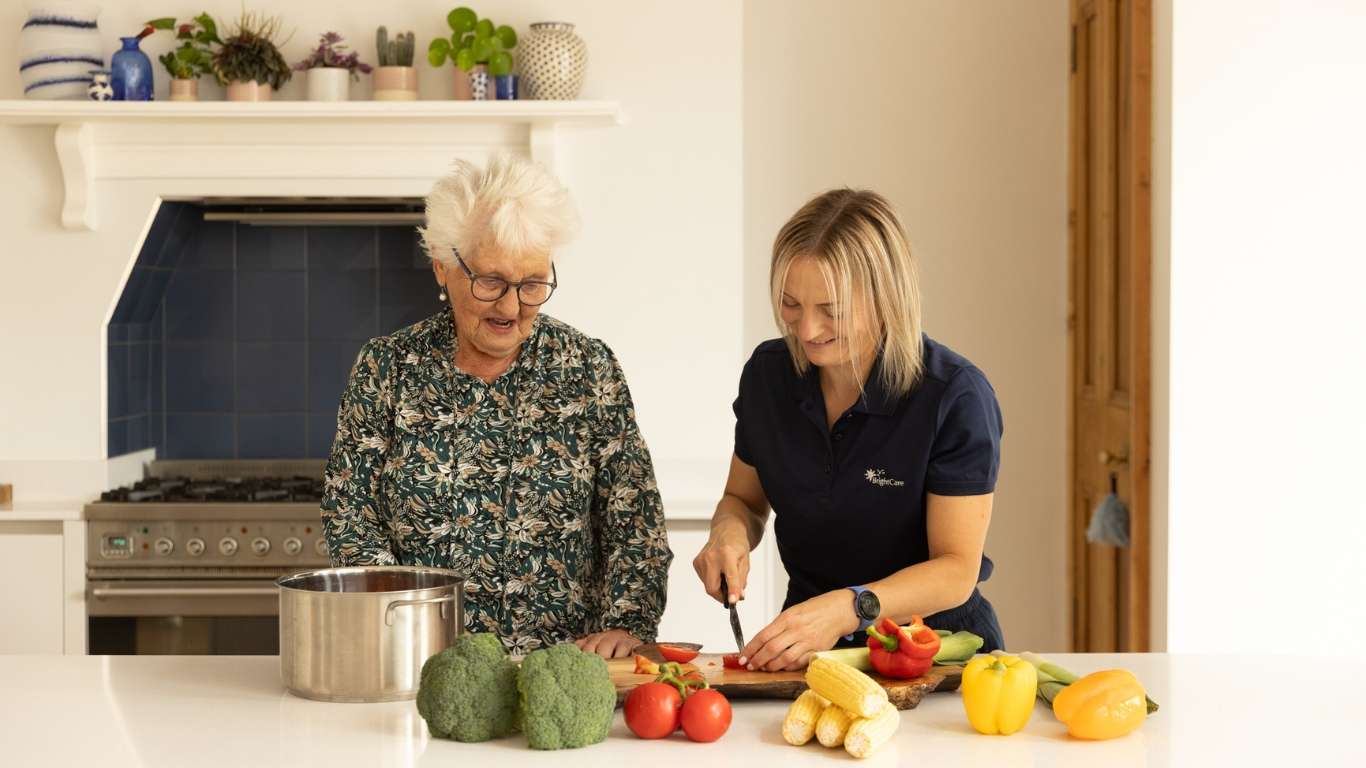

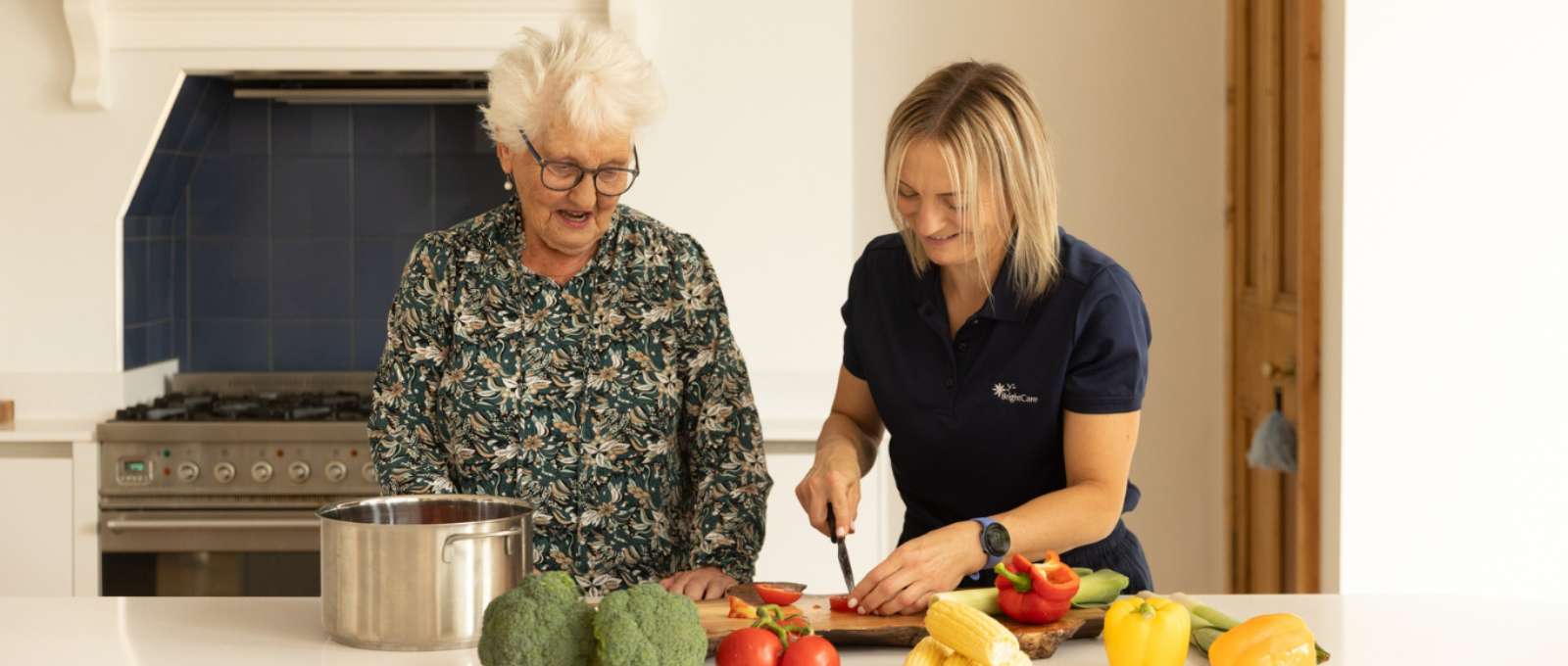
As we age, our bodies change and so do our nutritional needs. Good nutrition is vital for ageing well, helping us stay strong, maintain independence and live a healthy, happy life. As part of our Ageing Well series, we’ll look at why nutrition is essential for older adults, what foods to focus on and tips for carers to ensure older adults eat well. We’ll also explore why some older adults may be at risk of not eating enough and where to find home delivered nutritious meals.
Why is nutrition important as we age?
Eating well becomes even more important as we get older. Our bodies become less efficient at absorbing nutrients, making it essential to focus on nutrient-rich foods. Good nutrition helps older adults:
- Maintain muscle strength – this helps with mobility and reduces the risk of falls.
- Boost the immune system – a healthy diet supports the body’s ability to fight off illness.
- Support brain function – eating well promotes better memory and mental health.
- Improve digestion – a high-fibre diet with plenty of fluids is crucial for digestion as the digestive system slows with age.
By focusing on good nutrition, older adults can age better, maintaining the strength and energy to enjoy life and stay active.
Why might older adults be at risk of poor nutrition?
There are several reasons why older adults may struggle to get the nutrition they need. Some of the more common factors include:
- Reduced appetite – appetite often decreases with age, making it harder for older adults to eat enough.
- Difficulty chewing or swallowing – dental issues or medical conditions can make eating solid foods uncomfortable.
- Living alone – those living alone may not feel motivated to cook or eat, especially if they lack social interactions at mealtimes.
- Physical limitations – reduced mobility can make shopping for groceries or cooking meals more difficult.
- Financial concerns – a limited budget can lead to buying cheaper, less nutritious food options.
- Memory problems – older adults with dementia or other cognitive impairments may forget to eat or struggle to prepare balanced meals.
What should older adults be eating?
Eating a balanced, healthy diet is key to ageing well and there are some important foods and nutrients to focus on:
- Protein – for muscle maintenance. Good sources include lean meats, fish, eggs, beans, and dairy.
- Fibre – essential for digestion and heart health. Whole grains, fruits, vegetables, and legumes are ideal.
- Calcium and Vitamin D – crucial for bone health. Dairy products, leafy greens, and fortified foods help, as well as vitamin D supplements.
- Healthy fats – found in fish, nuts, seeds, and olive oil, these fats support heart and brain health.
- Fluids – staying hydrated is key. Water, herbal teas, and milk are all excellent options.
Eating smaller, nutrient-dense meals more often is a good strategy, especially for older adults with reduced appetites.
How can you ensure older adults eat well?
If you’re caring for an older adult, there are a few ways you can help them maintain a balanced diet and support their healthy living:
- Plan balanced meals – make sure each meal has a balance of protein, fibre, and healthy fats.
- Encourage social eating – eating with others can make meals more enjoyable and encourage better eating habits.
- Adapt meals – for those with chewing or swallowing difficulties, provide softer foods like stews or soups.
- Watch for weight changes – unintentional weight loss or gain can signal a problem with diet or health.
- Offer healthy snacks – if appetite is an issue, offer small, healthy snacks such as yoghurt, fruit, or nuts.
Home delivery of nutritious ready meals
For older adults who struggle with shopping or cooking, several companies in the UK offer home delivery of nutritious, ready-made meals. These services provide convenient, balanced meals that support healthy living. Here are a few popular options:
- Cook
Cook offers high-quality, hand-prepared frozen meals made with natural ingredients. Their meals are a bit more gourmet, catering to those who want healthy, delicious food but prefer not to cook from scratch. - Wiltshire Farm Foods
Wiltshire Farm Foods offers a wide range of frozen meals, specifically designed for older adults. Meals can be heated in the oven or microwave and cater to various dietary needs, including low-sugar, low-salt, and softer foods for easy chewing. - Oakhouse Foods
Oakhouse Foods delivers over 300 frozen meals across the UK, with options for all tastes and diets. They offer meals that are easy to prepare and have options for people with specific dietary requirements. - Parsley Box
Parsley Box delivers meals that don’t need to be frozen or chilled. Their meals can be reheated in minutes, making them convenient for older adults looking for quick, easy options without the need for a freezer.
Good nutrition plays a big role in ageing well and staying healthy in later life. For older adults, eating a balanced diet that includes plenty of protein, fibre, and healthy fats can help them stay strong, maintain energy levels, and support brain and digestive health. Carers and family members can support older adults by encouraging healthy eating habits, planning and preparing balanced meals and using home-delivery meal services when needed.